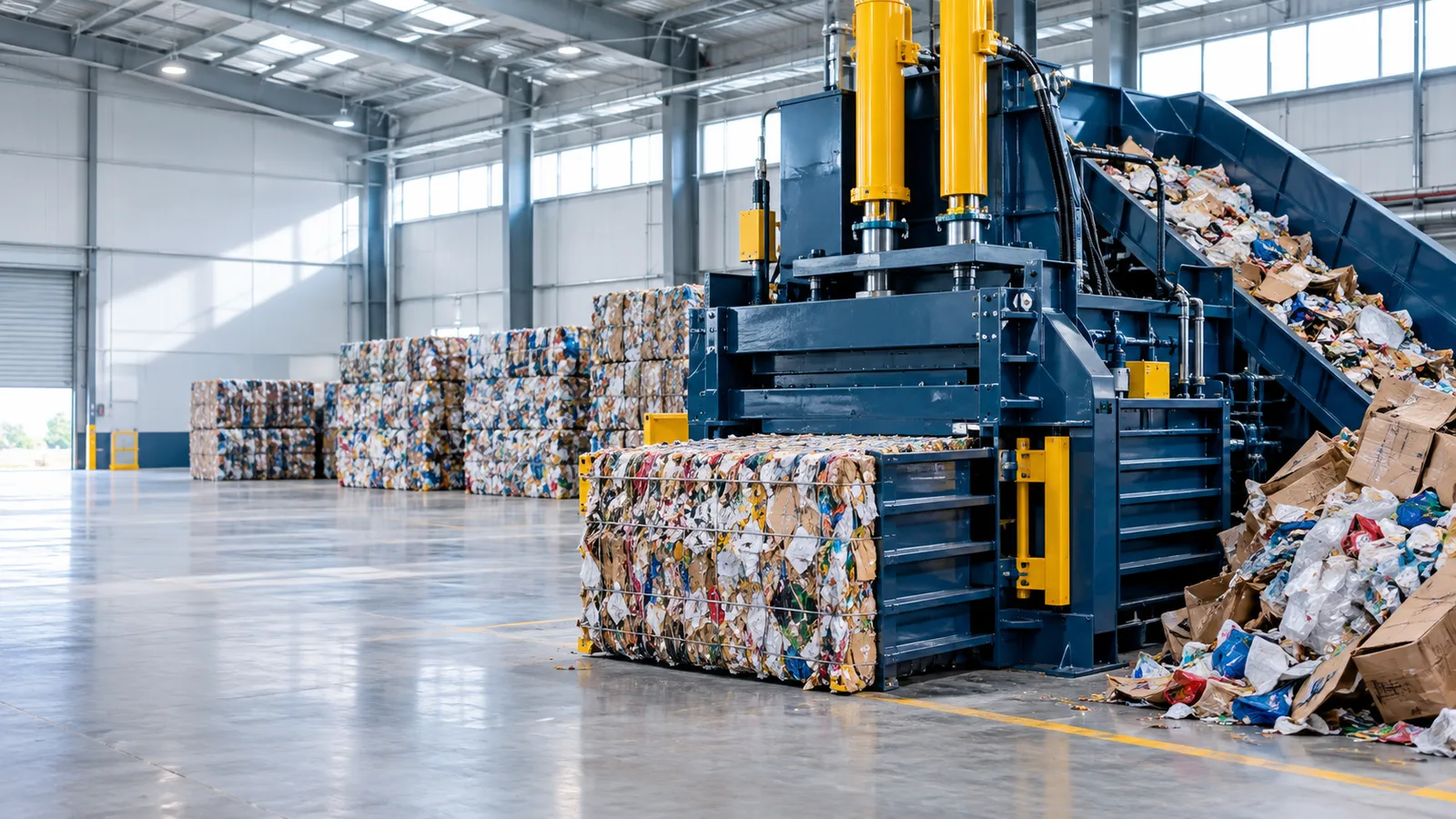
Managing industrial waste efficiently is an important part of modern manufacturing, recycling, warehousing, and commercial operations. Large quantities of cardboard, paper, plastic, textile waste, and other recyclable materials can quickly occupy valuable floor space and increase handling and transportation costs.
A waste baler machine helps businesses solve this challenge by compressing loose waste materials into dense, manageable bales. These bales are easier to store, handle, transport, and send for recycling. For industries handling high volumes of recyclable waste, choosing the right industrial baling solution can improve workflow efficiency while supporting better waste management practices.
What Is a Waste Baler Machine?
A waste baler machine is industrial equipment designed to compress recyclable or waste materials into compact bales. Depending on the machine type, hydraulic pressure is used to compress materials and create uniform, high-density bales.
Common materials processed using industrial balers include cardboard, paper, plastic, PET bottles, textile waste, shredded materials, and certain municipal or industrial waste streams.
Fabtex Sustainability Solutions provides industrial baling solutions designed for different recycling and waste-handling applications. Its product range includes semi-automatic and fully automatic baling machines, cardboard balers, paper balers, textile balers, and specialized scrap baling systems.
Why Use an Industrial Waste Baler?
Businesses often deal with waste materials that are bulky but relatively lightweight. Storing these materials in loose form can consume considerable space and make internal transportation difficult.
An industrial waste baler can help address these challenges by:
- Compressing loose waste into compact bales
- Reducing the space required for waste storage
- Improving material handling efficiency
- Making recyclable materials easier to transport
- Reducing manual handling requirements
- Supporting organized recycling workflows
- Improving the overall use of warehouse or plant space
For example, Fabtex horizontal balers are designed for high-density waste compaction and can process materials such as paper, cardboard, PET bottles, shredded materials, and agricultural waste.
How Does a Waste Baling Machine Work?
The basic working process is straightforward. Waste material is first collected and fed into the machine's chamber. A hydraulic compression system then applies pressure to compact the material.
Once sufficient compression is achieved, the compacted material is secured to form a bale. Depending on the machine design, tying, feeding, and bale ejection can be manual, semi-automatic, or fully automatic.
Fully automatic systems can provide continuous feeding, automatic tying, and high-volume processing. This makes them particularly suitable for recycling plants, warehouses, manufacturing facilities, packaging industries, and other operations with significant daily waste volumes.
Types of Waste Baling Machines
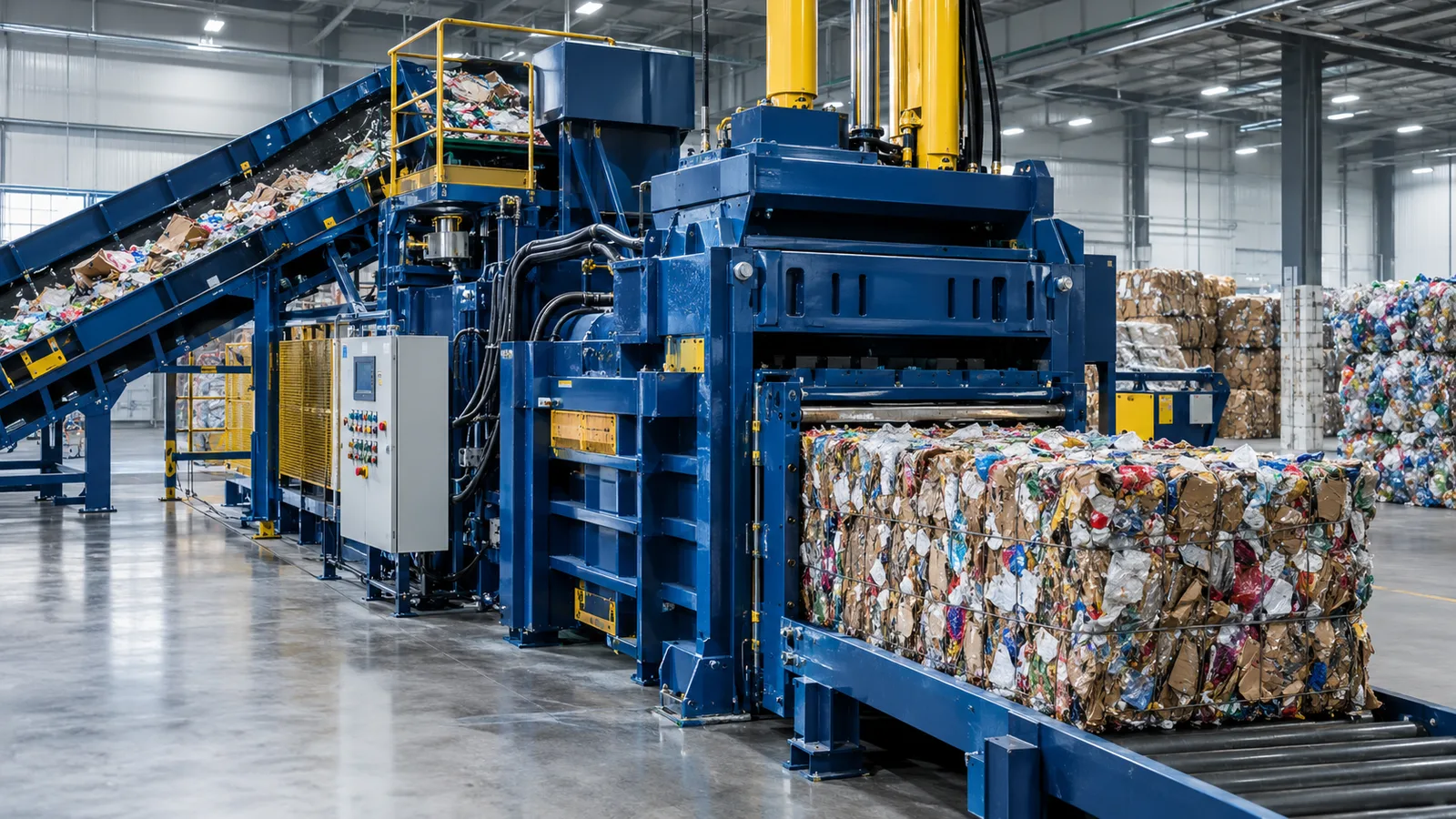
Different waste streams require different baling solutions. Businesses should select equipment based on the material type, daily waste volume, available floor space, required bale weight, and desired level of automation.
1. Cardboard Baler
A cardboard baler is designed for materials such as OCC, cartons, packaging board, and other paper-based waste. These systems are useful for warehouses, retail distribution centers, packaging companies, and recycling facilities.
2. Paper Baler
A paper recycling baler can process materials such as newspapers, magazines, Kraft paper, shredded paper, packaging paper, and mixed paper waste. Compacting paper into bales can simplify storage and transportation.
3. Plastic Waste Baler
Plastic materials such as PET bottles and other recyclable plastic waste can be compacted using suitable industrial baling equipment. High-density bales can make material handling more organized and efficient.
4. Textile Waste Baler
Textile balers are designed for cotton, polyester, nylon, rags, fabric scraps, used clothing, foam, and other textile materials. Fabtex offers textile baling solutions for spinning mills, garment industries, recycling facilities, and textile waste processing operations.
Key Factors to Consider Before Buying
Choosing an industrial baling machine should be based on your actual waste-processing requirements rather than simply selecting the largest available model.
Consider these factors:
- Material type: Identify whether you process cardboard, paper, plastic, textile, metal, or mixed waste.
- Daily waste volume: Estimate the amount of material generated per shift or day.
- Bale size and weight: Choose a model that produces bales suitable for your storage and transportation requirements.
- Automation level: Semi-automatic systems may suit moderate workloads, while fully automatic systems are useful for high-volume operations.
- Available space: Check machine dimensions, feeding requirements, and bale storage space.
- Maintenance and support: Reliable technical support and access to maintenance assistance are important for continuous industrial operations.
Fabtex states that it provides customized recycling machinery based on operational requirements, along with technical and after-sales support.
Why Choose Fabtex Sustainability Solutions?
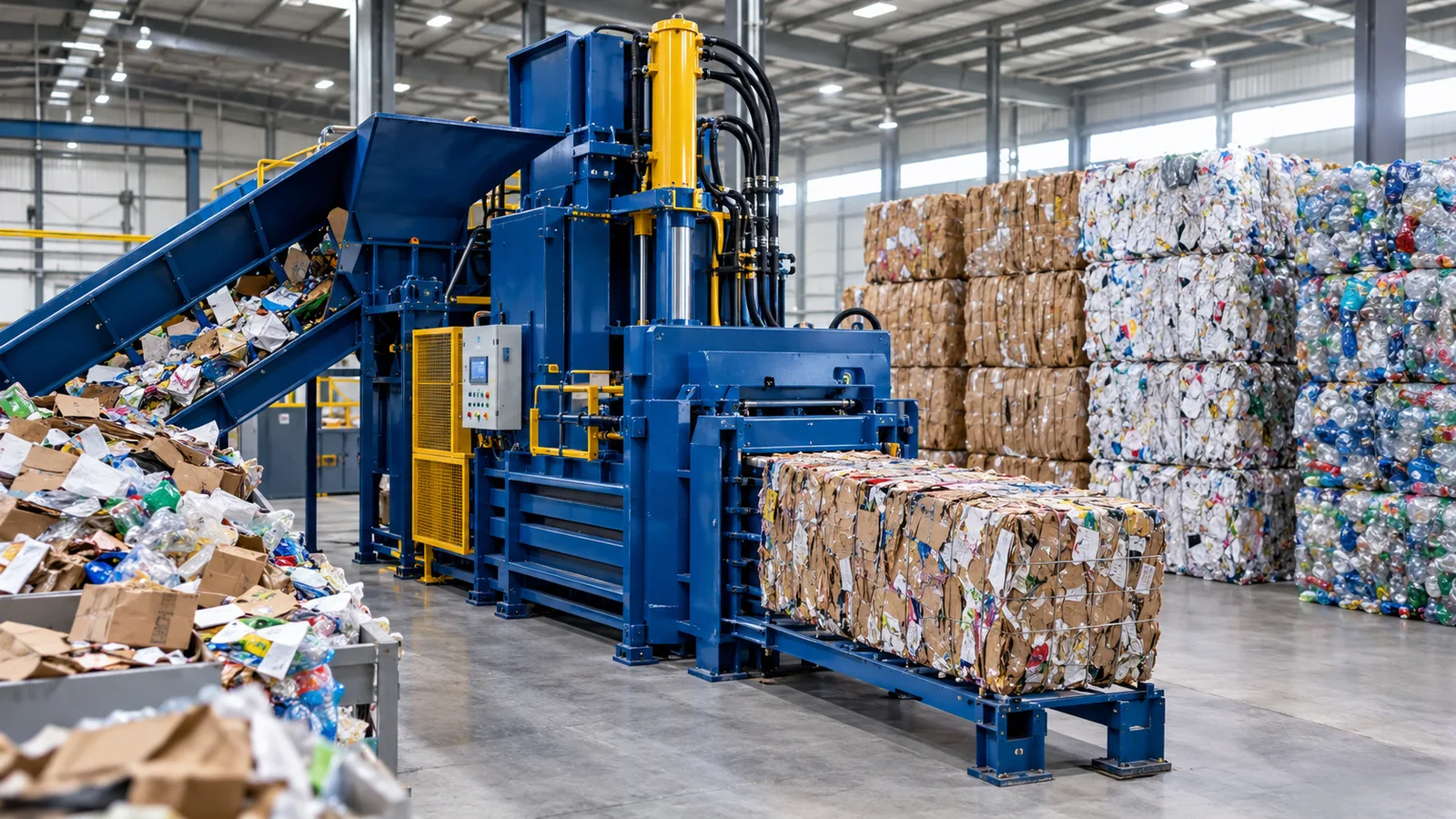
Fabtex Sustainability Solutions LLC focuses on industrial balers, shredders, and material-handling equipment for modern recycling and waste management applications. The company highlights engineering and manufacturing experience dating back to 1995 and serves industrial applications across the USA and Georgia.
Its equipment portfolio covers different waste streams and operating requirements, allowing businesses to explore solutions ranging from paper and cardboard balers to automatic baling systems and specialized scrap balers.
For companies looking for durable recycling equipment, the right machine should combine suitable compression performance, dependable construction, operational efficiency, safety considerations, and appropriate technical support.
Frequently Asked Questions
Improve Your Waste Management Process
Efficient waste handling starts with choosing equipment that matches your material, capacity, and operational requirements. A properly selected industrial baler can help businesses organize recyclable materials, optimize storage space, streamline handling, and support more efficient recycling operations.
If your facility handles large volumes of cardboard, paper, plastic, textile, or other recyclable materials, explore the industrial baling solutions from Fabtex Sustainability Solutions LLC and discuss your requirements with their technical team.
Get in Touch →