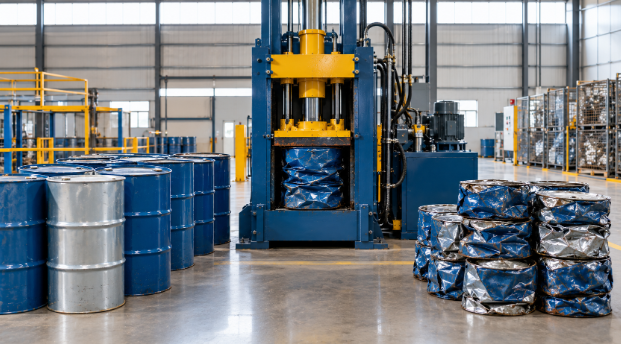
Industrial facilities regularly handle empty steel drums, oil containers, paint drums, and other large metal containers. Once these containers are emptied, they can take up considerable storage space and create challenges for transportation, disposal, and recycling. Efficiently managing this waste is an important part of maintaining a cleaner and more organised industrial environment.
An industrial drum crusher provides a practical way to reduce the volume of empty drums through controlled hydraulic compression. By compacting drums before storage, transportation, or recycling, industries can make better use of available space and improve their overall waste-handling process. You can explore our range of drum crusher machines to see how this equipment is built.
What Is an Industrial Drum Crusher?
An industrial drum crusher is a heavy-duty machine designed to compress and reduce the size of empty metal drums. These machines commonly use a hydraulic crushing system to apply controlled pressure to the drum.
Instead of manually handling large quantities of empty containers, industries can use dedicated drum crushing equipment to process them more efficiently. Depending on the machine design and application, drum crushers can be used for steel drums and other suitable industrial containers.
The compacted material can then be managed according to the facility's waste-disposal or recycling procedures.
How Does a Drum Crusher Improve Waste Management?
Effective industrial waste management is not only about disposing of waste. It also involves reducing unnecessary storage requirements, improving handling procedures, and making materials easier to transport. A drum crusher can support these objectives in several ways.
1. Reduces Waste Volume
Empty drums can occupy significant space when stored in their original form. Hydraulic compression reduces their physical volume, allowing facilities to use storage areas more efficiently. This waste volume reduction can be particularly useful for businesses that generate a large number of empty drums as part of their regular operations.
2. Makes Storage More Efficient
Large numbers of empty containers can quickly create clutter in warehouses and designated waste-storage areas. Compacting them can help businesses organise their waste more effectively. Reducing the size of individual drums can also contribute to better waste storage reduction, particularly where available floor space is limited.
3. Supports Recycling Operations
Metal drums may have recycling value when they are handled according to appropriate industry and environmental procedures. Compacting suitable empty drums can make collection, handling, and transportation more manageable for recycling facilities.
For organisations involved in metal drum recycling, a drum crusher can become part of a broader material recovery and waste-processing workflow, often alongside scrap baler machines that compress other metal waste into dense bales.
4. Improves Material Handling
Handling empty drums manually can require considerable space and physical effort. Mechanical compression provides a more systematic approach to industrial waste handling. A suitable machine can help facilities establish a repeatable process for collecting, crushing, storing, and moving empty containers.
Applications Across Different Industries
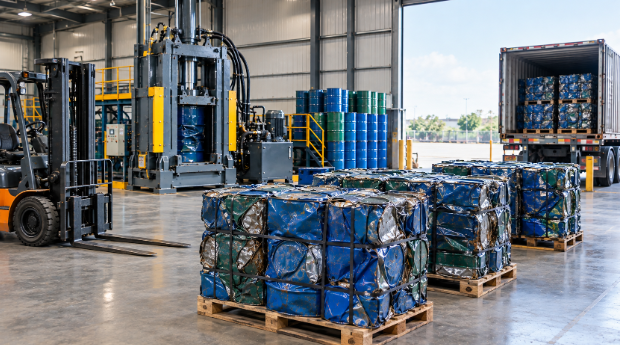
Drum crushing equipment can be relevant to several industries that regularly deal with empty metal containers.
Manufacturing Industries
Manufacturing facilities may generate empty drums from raw materials, lubricants, coatings, or other production-related processes. A drum crusher can help manage these containers after their contents have been used.
Chemical Industries
Chemical-processing facilities may handle different types of industrial containers. However, drums containing hazardous or residual materials require appropriate inspection, preparation, and safety procedures before crushing.
Oil and Paint-Related Operations
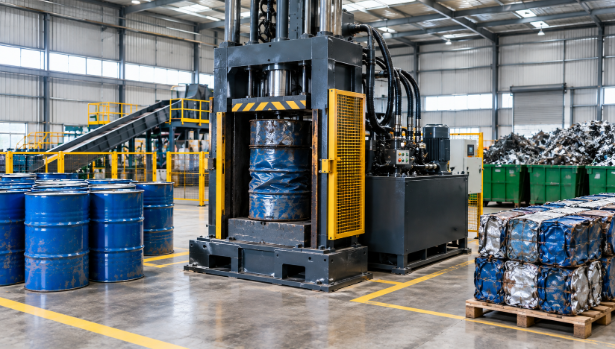
Oil and paint drums can occupy substantial storage space once emptied. Where the containers are suitable for processing, a steel drum crusher can help reduce their volume and simplify subsequent handling. The exact preparation requirements depend on the material previously contained in the drum and applicable safety and environmental regulations.
Drum Crusher vs. Traditional Drum Storage
Storing empty drums without compaction can result in inefficient use of warehouse or waste-storage space. Drums remain bulky and may require frequent rearrangement as their quantity increases.
A drum compactor machine approaches the problem differently by reducing the physical size of suitable containers before they are stored or transported. The appropriate solution depends on factors such as drum size, material, operating volume, available space, required crushing force, and the facility's waste-management process.
Important Safety Considerations
Drum crushing should always be approached as an industrial process rather than a simple disposal activity.
Before processing a drum, facilities should determine what it previously contained and follow the manufacturer's operating instructions and applicable workplace-safety requirements. Containers with hazardous, pressurised, flammable, or unknown contents may require specialised handling and should not be processed without proper assessment.
Safe operation depends on:
Businesses should also ensure that their drum-processing procedures comply with applicable environmental and occupational safety requirements.
Choosing the Right Drum Crushing Equipment
When selecting an industrial drum crusher machine, businesses should consider more than crushing capacity. Important factors can include:
- Type and size of drums being processed
- Required crushing force
- Hydraulic system and operating mechanism
- Expected processing volume
- Available installation space
- Operator safety features
- Maintenance requirements
- Waste-handling and recycling procedures
A heavy-duty drum crusher may be suitable for facilities with higher processing demands, while other applications may require a machine configured for specific drum sizes or operating conditions. Understanding the actual requirements of the facility helps businesses select equipment that fits their workflow instead of choosing a machine based only on crushing capacity. Our guide on how to choose the right recycling machine for your business walks through the same decision process for balers and other recycling equipment.
Conclusion
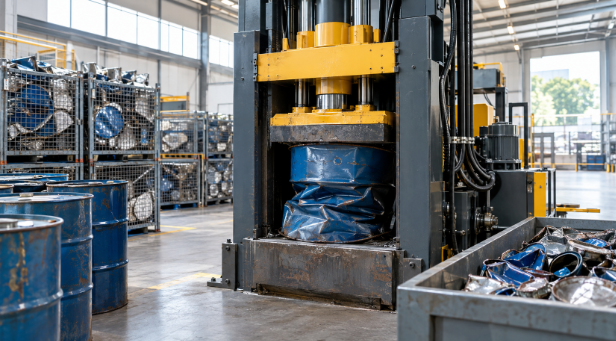
Efficient drum processing can play an important role in modern industrial waste management. By reducing the physical volume of suitable empty drums, an industrial drum crusher can help businesses improve storage efficiency, simplify material handling, and support recycling workflows.
For manufacturing plants, recycling facilities, chemical operations, and other industries that regularly generate empty metal drums, drum crushing equipment can be considered as part of a broader waste reduction solution. The right equipment should always be selected according to the type of drums, operating requirements, safety procedures, and applicable regulations. If you are unsure which configuration fits your facility, you can contact our team for guidance.
To learn more about our manufacturing capabilities in the region, read why Fabtex Sustatech is a trusted hydraulic baler manufacturer in Georgia.
Need a Drum Crushing Solution?
Tell us about your drum size, volume, and workflow, and our team will help you find suitable equipment.
Get in Touch →